
Browse all items
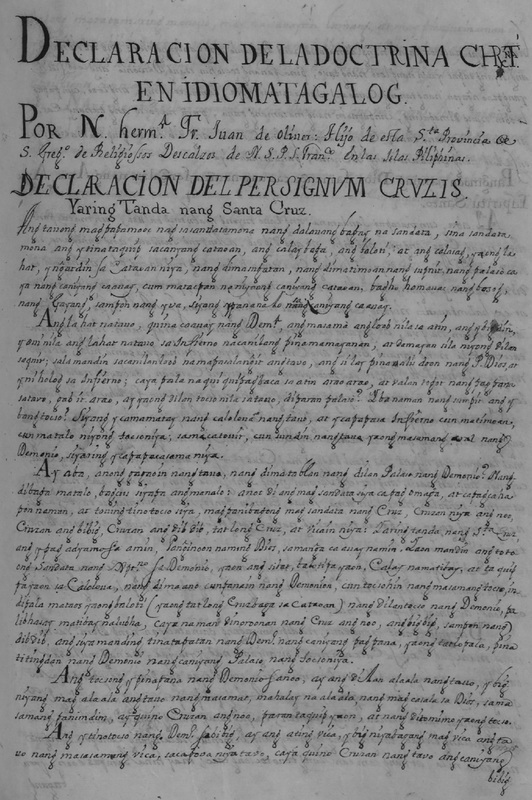
Fray Juan de Oliver
For example, the manuscript of Fray Juan de Oliver’s Declaración de la doctrina christiana en idioma tagalog pictured above from the 1590s can be…
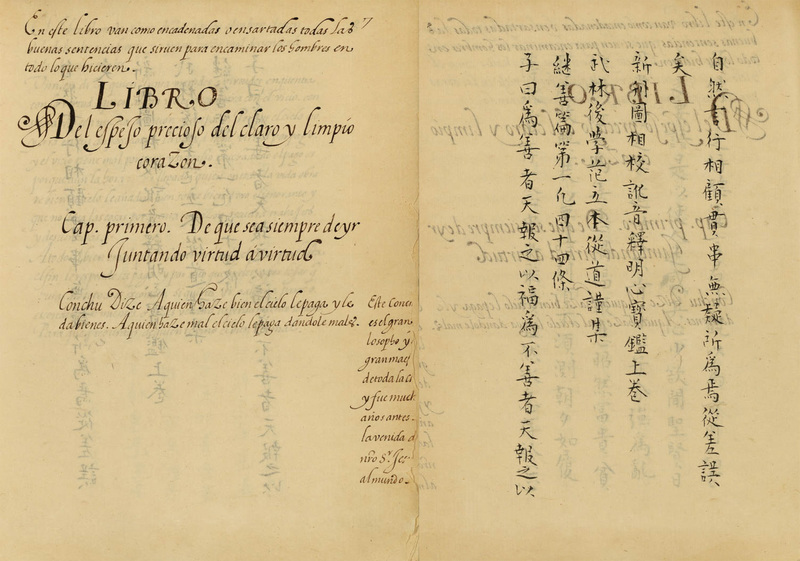
Juan Cobo and Fan Liben
Pictured above is the title page in Spanish and Chinese of the Espejo rico del claro corazón (Precious Mirror of the Clear and Pure Heart), a…
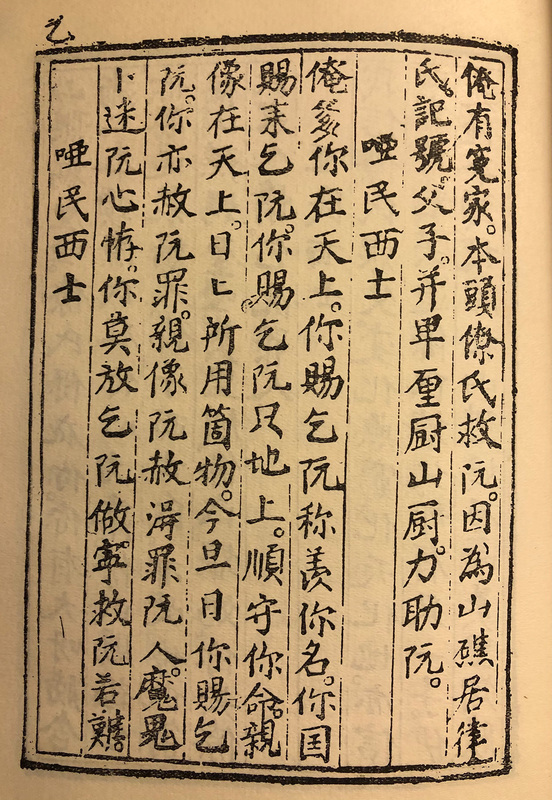
Miguel de Benavides and Juan Cobo
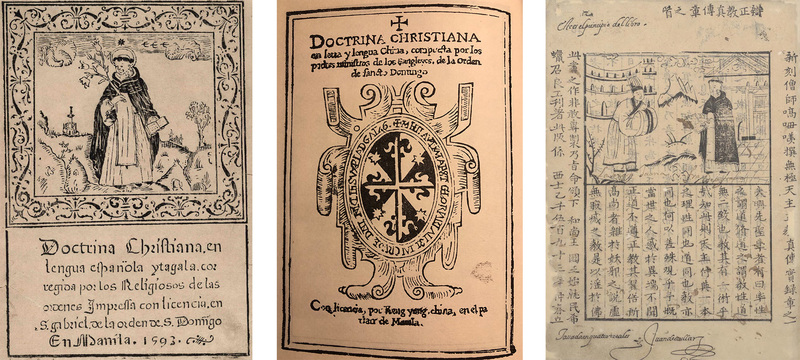
A facsimile of the entire Chinese Doctrina (above) is included as an appendix in the book Primitivas relaciones de España con Asia y Oceanía (Spain’s…
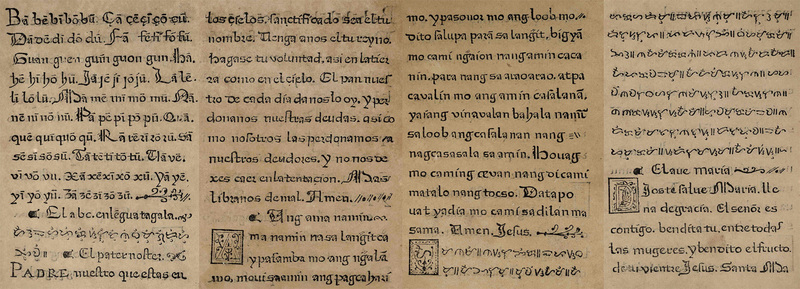
Fray Juan de Plasencia
In the Doctrina passages above we see The Lord’s Prayer written in three forms: the Spanish version in the Latin alphabet from the lower part of the…
From left to right: Fray Juan de Plasencia, Juan Cobo, Miguel de Benavides and Juan Cobo
In the Tagalog Doctrina, we see an image of the order’s founder, St. Dominic of Guzmán, donning the black and white habit of the order with the…
Bartolomé de Letona
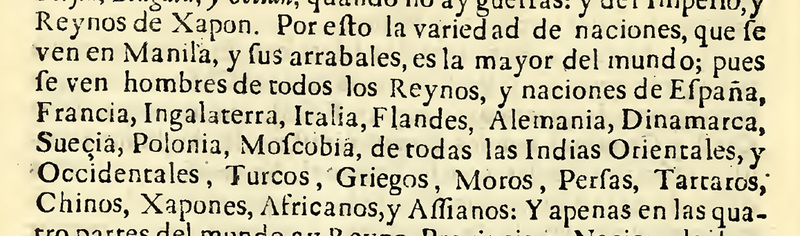
For instance, in this passage from the 1662 book Perfecta religiosa (The Perfect Nun), the Franciscan priest Bartolomé de Letona described the…
Creator Unknown
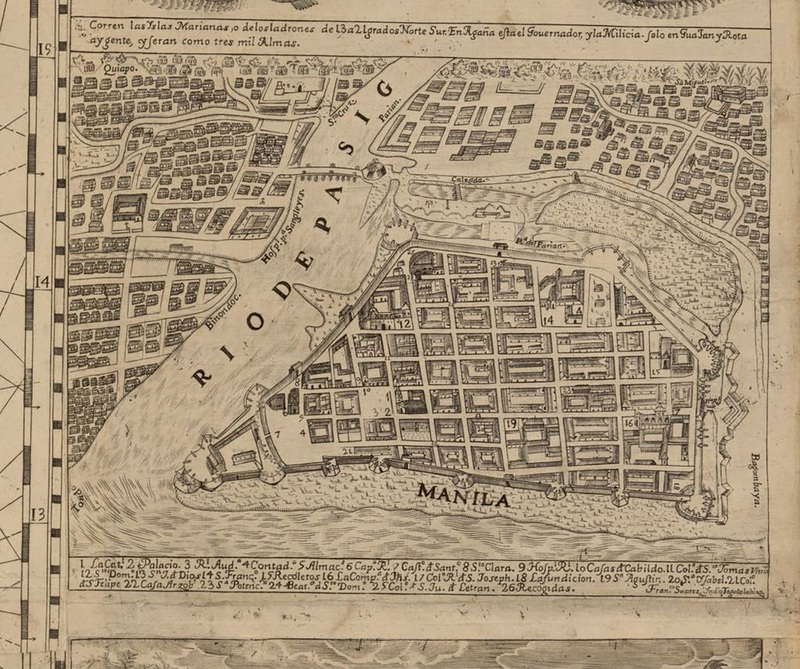
The map of Manila pictured above is taken from the Carta hydrographica y chorographica de las Yslas Filipinas (Hydrographic and Chorographic Map of…
Petrus Bertius
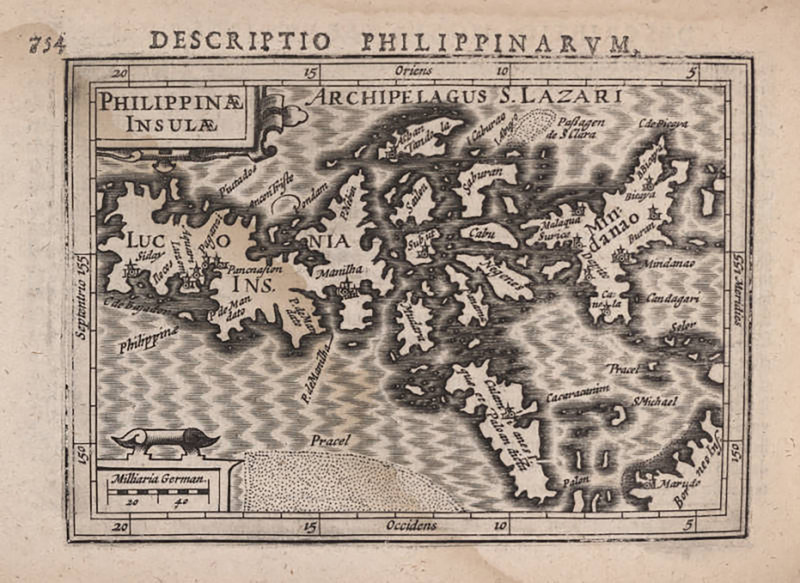
Labelled in Latin and printed sideways, the Descriptio Philippinarum has a rectangular border indicating longitude and latitude. Dark shading…
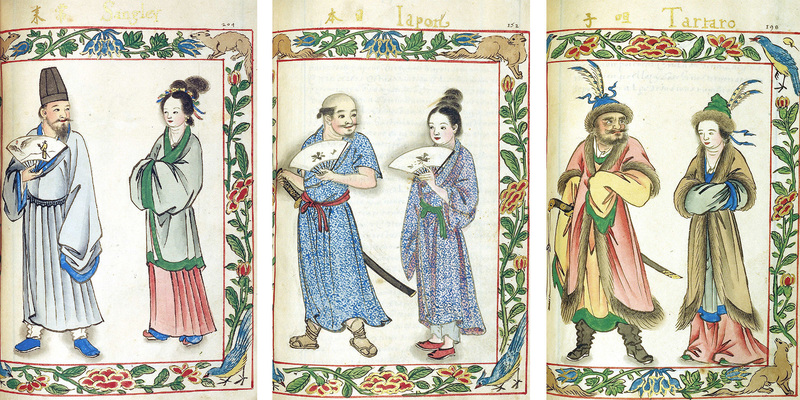
Creator Unknown
The Boxer Codex also featured drawings of people from other parts of Asia, as pictured above in the three images. Seen from left to right, the first…
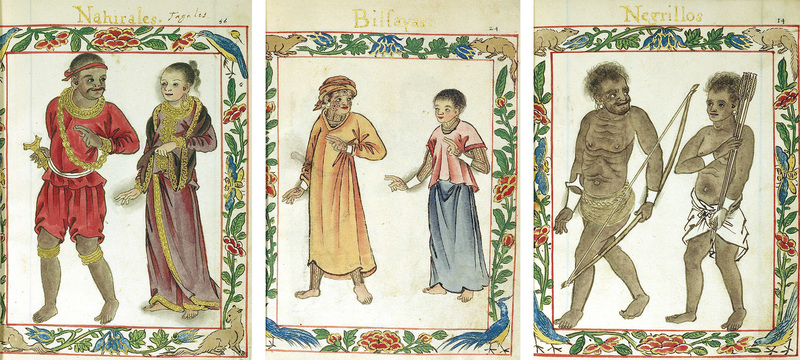
Illustrations from pages 56, 24, and 14 of the Boxer Codex manuscript: Tagalogs, Visayans, Negrillos
Creator Unknown
These three illustrations from the Boxer Codex depict some of the indigenous peoples living in the Philippines in their traditional garments. Each…